

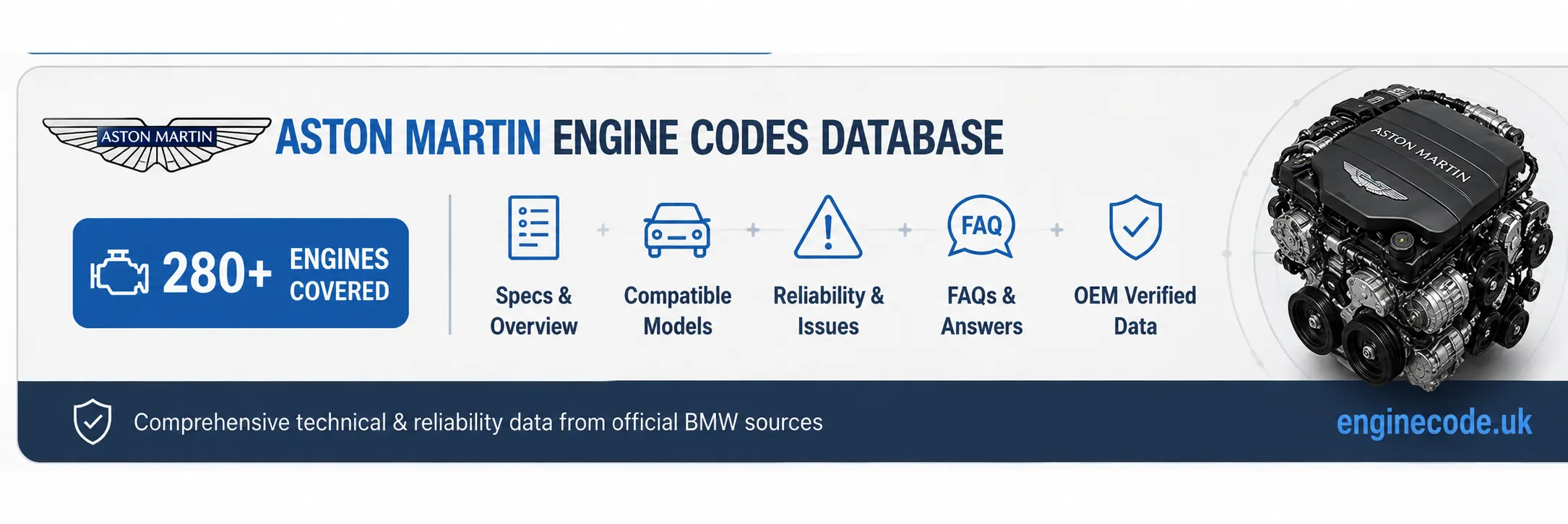
Covers Aston Martin petrol, hybrid, and electric powertrains used across UK and European models - from early LB6 engines to modern AMG-sourced V8s and PHEV systems. Each engine code includes specifications, compatible vehicles, and emissions data, sourced from official Aston Martin, Mercedes-AMG and EU records.
Data sourced from Aston Martin TIS, Mercedes-AMG Technical Documentation, VCA Type Approval Database, and EU Regulation (EC) No 715/2007.
Find Aston Martin engine codes by series, model, or generation
| Engine Code | Fuel Type | Series | Specifications |
|---|---|---|---|
| Petrol | 1lr Gue | View Specs | |
| Petrol | 2ur Gse | View Specs | |
| Petrol | 2zz Ge | View Specs | |
| Petrol | AE-Series | View Specs | |
| Petrol | AE-Series | View Specs | |
| Petrol | AE-Series | View Specs | |
| Petrol | AE-Series | View Specs | |
| Petrol | AE-Series | View Specs | |
| Petrol | AE-Series | View Specs | |
| Petrol | AE-Series | View Specs | |
| Petrol | AE-Series | View Specs | |
| Petrol | AJ-Series | View Specs | |
| Petrol | AJ-Series | View Specs | |
| Petrol | AJ-Series | View Specs | |
| Petrol | AM-Series | View Specs | |
| Petrol | AM-Series | View Specs | |
| Petrol | AM-Series | View Specs | |
| Petrol | AM-Series | View Specs | |
| Petrol | AM-Series | View Specs | |
| Petrol | AM-Series | View Specs | |
| Petrol | AM-Series | View Specs | |
| Petrol | B-Series | View Specs | |
| Petrol | B-Series | View Specs | |
| Petrol | B-Series | View Specs | |
| Petrol | BAMFORD-Series | View Specs | |
| Petrol | BAMFORD-Series | View Specs | |
| Petrol | C-Series | View Specs | |
| Petrol | CB-Series | View Specs | |
| Petrol | COSWORTH-Series | View Specs | |
| Petrol | COSWORTH-Series | View Specs | |
| Petrol | DB-Series | View Specs | |
| Petrol | DB-Series | View Specs | |
| Petrol | DBR-Series | View Specs | |
| Petrol | DP-Series | View Specs | |
| Petrol | DP-Series | View Specs | |
| Petrol | EA-Series | View Specs | |
| Petrol | EA-Series | View Specs | |
| Petrol | J-Series | View Specs | |
| Petrol | LB-Series | View Specs | |
| Petrol | M-Series | View Specs | |
| Petrol | M-Series | View Specs | |
| Petrol | M-Series | View Specs | |
| Petrol | M-Series | View Specs | |
| Petrol | M-Series | View Specs | |
| Petrol | M-Series | View Specs | |
| Petrol | N-Series | View Specs | |
| Petrol | N-Series | View Specs | |
| Petrol | RCR-Series | View Specs | |
| Petrol | M-Series | View Specs | |
| Petrol | M-Series | View Specs | |
| Petrol | TB-Series | View Specs | |
| Petrol | TB-Series | View Specs | |
| Petrol | TM-Series | View Specs | |
| Petrol | V-Series | View Specs | |
| Petrol | V-Series | View Specs | |
| Petrol | V-Series | View Specs | |
| Petrol | V-Series | View Specs | |
| Petrol | VB-Series | View Specs | |
| Petrol | VB-Series | View Specs | |
| Petrol | VB-Series | View Specs | |
| Petrol | VH-Series | View Specs | |
| Petrol | VH-Series | View Specs | |
| Petrol | VH-Series | View Specs | |
| Petrol | VH-Series | View Specs | |
| Petrol | VH-Series | View Specs | |
| Petrol | VH-Series | View Specs | |
| Petrol | VH-Series | View Specs |
See where Aston Martin power drives other leading brands.
Explore Aston Martin's electrified powertrain technologies.
Engine specifications and technical data sourced from Aston Martin TIS, Mercedes-AMG Technical Documentation, and VCA Type Approval Database. Consult vehicle documentation or professional guidance before undertaking mechanical work. Report errors or omissions through our contact channels.
Engine Finders UK Ltd, which operates EngineCode.uk, can pass your enquiry to engine suppliers in the UK. The service is for vehicles in the United Kingdom, with UK delivery or fitting. This is a commercially connected service, and sending an enquiry does not confirm diagnosis or compatibility.
The engine code is essential for ordering parts, diagnosing issues, and verifying compatibility. It is not the same as the VIN or chassis number. This guide shows exactly where to find it - by model and engine type - using official Aston Martin and DVLA sources

A unique identifier stamped on the engine block or cover used for parts and service.
The vehicle identification number that holds encoded vehicle and engine information.

The chassis or frame number used for registration and legal identification.
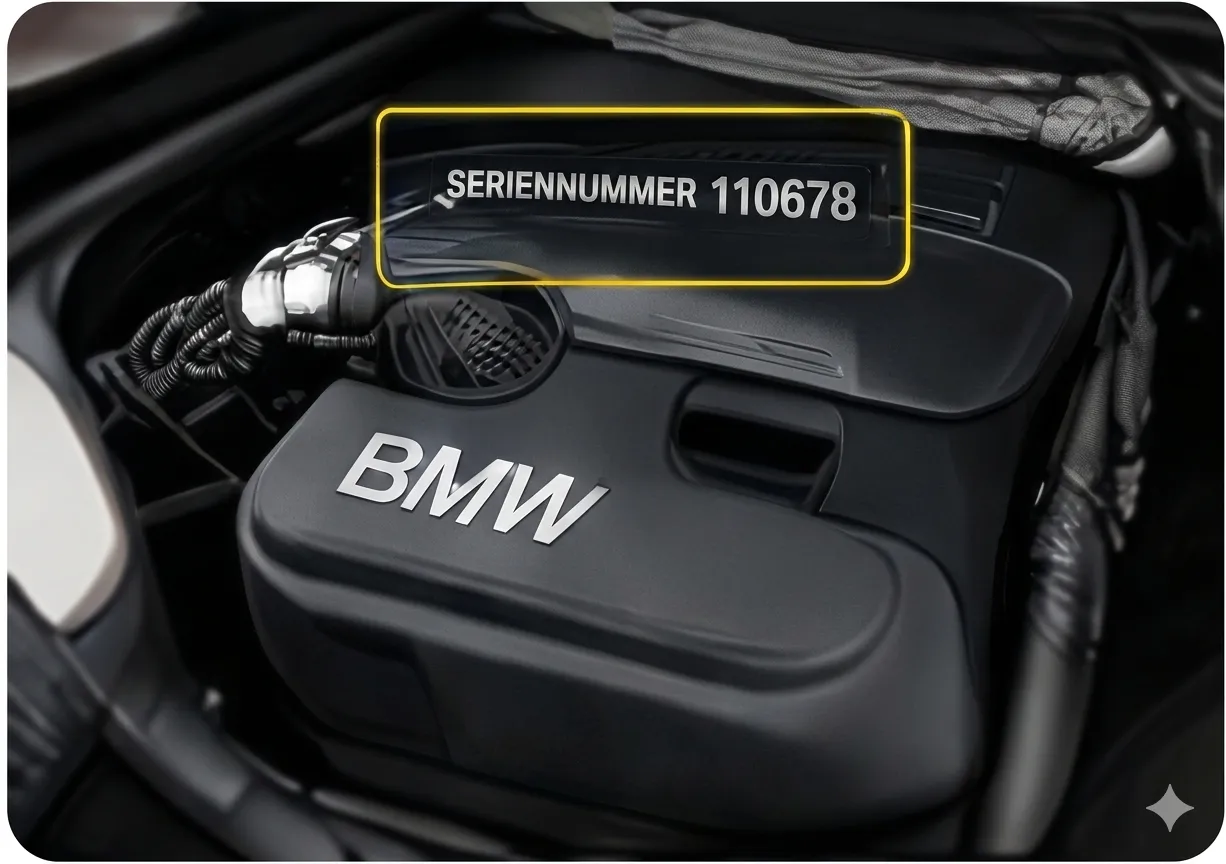
Locate the engine code on a white adhesive label affixed to the left-hand (driver's side) camshaft cover, near the oil filler. Clean the area before reading. Difficulty: Simple.
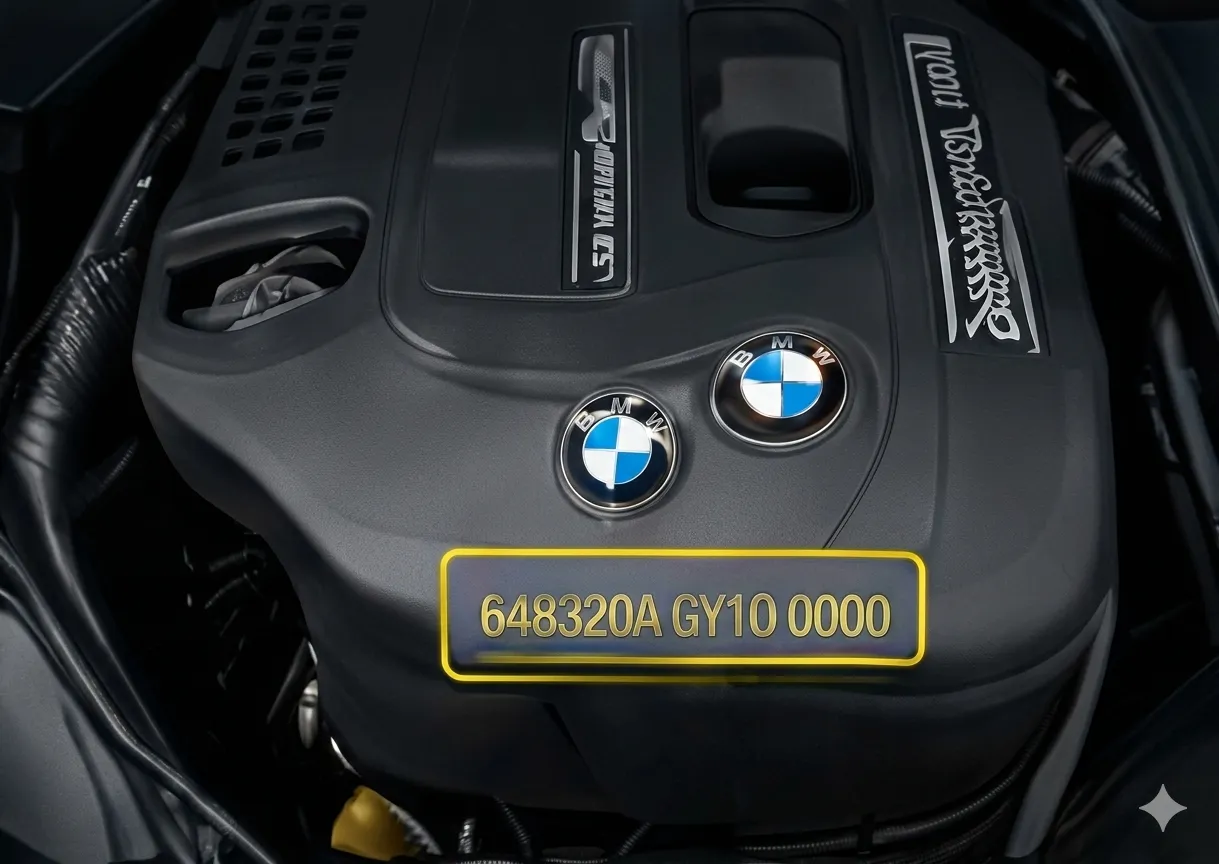
Engine code stamped into the aluminium block on the passenger-side cylinder bank, adjacent to the exhaust manifold. Requires removing the acoustic engine cover for clear visibility. Difficulty: Moderate.
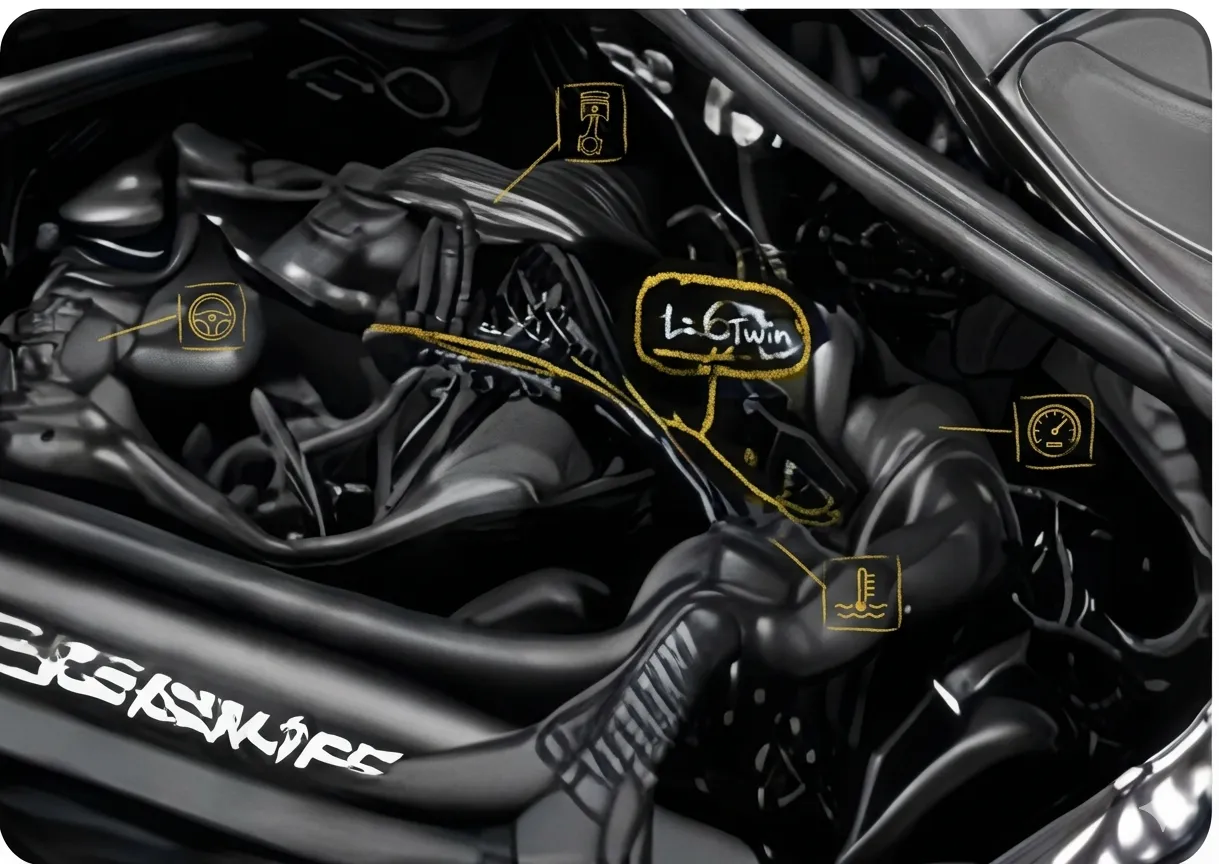
Code is cast into the rear timing cover on the left side of the engine bay. A mirror and torch are often required due to tight packaging. Difficulty: Moderate.
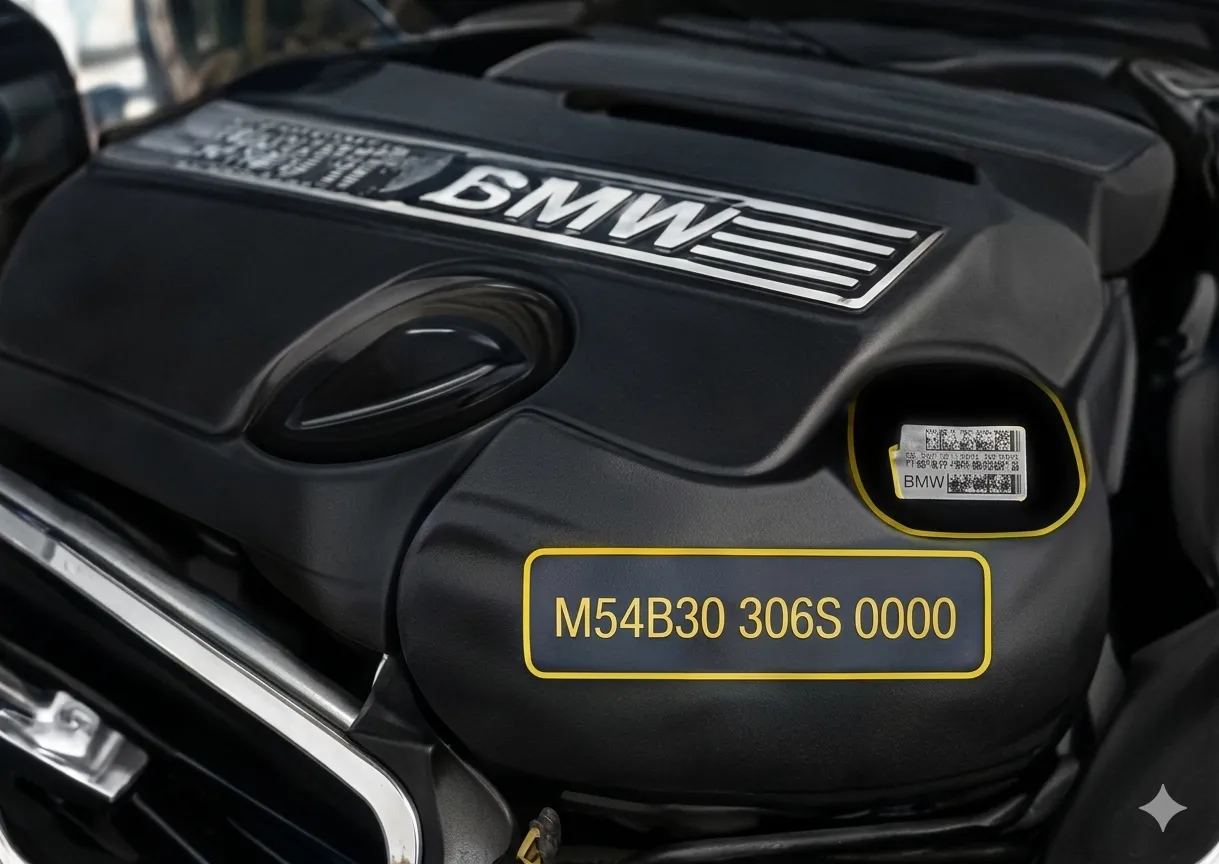
Hybrid engine code on front timing cover with additional PHEV badge. Electric motor identifier on inverter housing. Requires professional access due to high-voltage components.
Engine code locations per Aston Martin TIS Service Information. V5C field definitions from DVLA Guide to Vehicle Registration. VIN structure compliant with EU Regulation (EC) No 715/2007, Article 7.
A technical breakdown of Aston Martin's core engine systems including AM11 V12 architecture, AMG-sourced twin-turbo V8s, variable valve timing, direct injection systems, and hybrid integration with documented reliability impacts. All data sourced from Aston Martin TIS, Mercedes-AMG documentation and EU Regulation (EC) No 715/2007
The AM11 is a bespoke 5.9–6.0L naturally aspirated V12 developed initially with Cosworth and refined in-house at Gaydon. Designed for high-revving character, linear power delivery, and acoustic refinement, it powered the DB9, DBS, Rapide, and Vanquish platforms across three generations.
Features a 65° cylinder bank angle, aluminium block and heads, dual overhead camshafts per bank, and a dry-sump lubrication system. Intake uses individual throttle bodies (early models) or composite plenums with electronic drive-by-wire. Exhaust routing incorporates active valves for variable sound profiles.

5.9L AM11 (2004)
Dual throttle bodies, 450 bhp
5.9L AM11 (2007)
Composite intake, 470 bhp, cylinder deactivation
6.0L AM11 (2012)
Vanquish spec, 565 bhp, revised cams
Valve cover gasket seepage
Typically observed after 60,000 miles due to heat cycling
Cylinder deactivation solenoid faults
Can cause rough idle or MIL illumination on Euro 5 models
Cam phaser wear
High-revving usage may accelerate timing chain tensioner fatigue
The AM11 is a bespoke 5.9–6.0L naturally aspirated V12 developed initially with Cosworth and refined in-house at Gaydon. Designed for high-revving character, linear power delivery, and acoustic refinement, it powered the DB9, DBS, Rapide, and Vanquish platforms across three generations.
Features a 65° cylinder bank angle, aluminium block and heads, dual overhead camshafts per bank, and a dry-sump lubrication system. Intake uses individual throttle bodies (early models) or composite plenums with electronic drive-by-wire. Exhaust routing incorporates active valves for variable sound profiles.
5.9L AM11 (2004)
Dual throttle bodies, 450 bhp
5.9L AM11 (2007)
Composite intake, 470 bhp, cylinder deactivation
6.0L AM11 (2012)
Vanquish spec, 565 bhp, revised cams
Valve cover gasket seepage
Typically observed after 60,000 miles due to heat cycling
Cylinder deactivation solenoid faults
Can cause rough idle or MIL illumination on Euro 5 models
Cam phaser wear
High-revving usage may accelerate timing chain tensioner fatigue
All technical descriptions and failure data sourced from Aston Martin Group Product Technical Reports, Aston Martin TIS Service Information, Mercedes-AMG Engineering Bulletins, and EU Regulation (EC) No 715/2007 on vehicle type-approval.
Authoritative data on Aston Martin's global engine production, plant operations, and strategic partnerships. All figures sourced from Aston Martin Annual Reports, Sustainability Reports, and EU industrial compliance records.
Aston Martin utilises a hybrid manufacturing model combining in-house Gaydon assembly with strategic partner supply for modern powertrains.


Aston Martin produces an estimated ~1,000–1,500 powertrain units annually, heavily influenced by limited-series production cycles and AMG supply agreements.
Note: Diesel production ceased entirely in 2009. Hybrid integration rising per 2025 electrification mandate. Figures estimated via VCA registration data and OEM production disclosures.
The 2013 powertrain partnership established long-term V8 supply and co-development of hybrid architectures. AMG provides base engines, while Aston Martin tunes intake, exhaust, ECU mapping, and integration.
Hot-V twin-turbo layout with direct injection and hybrid prep
Base engines built at Affalterbach, tuned and integrated at Gaydon
Aston Martin–Mercedes-Benz Partnership Announcement (2013), AMG Engineering Collaboration Brief
Shift in production reflects EU emissions policy, WLTP testing, and UK 2030 ICE phase-out roadmap.
This aligns with Commission Regulation (EU) 2017/1151 (WLTP/RDE) and EU 2035 ICE phase-out roadmap.
Aston Martin Group Annual & Sustainability Reports (2020–2024). Partnership details from Aston Martin Innovation Portal. Emissions regulations per EU Regulation (EC) No 715/2007 and Commission Regulation (EU) 2017/1151.
The most common questions about engine codes, what they mean, how to find them and how this database works
Confirm the full engine designation using vehicle-specific manufacturer records and the engine marking. An engine serial number, a registration record and a marketed power badge are not automatically the same identifier. Match the VIN/build data and the installed engine before selecting parts or a replacement.
No. A factory-application reference and a replacement-interchange decision are different. Match the full engine designation, vehicle build data, emissions equipment, controls and relevant supplier/OEM information.
No. Records have different review states. Read the correction notice, source scope and application limits on the individual record. Missing technical fields must not be inferred from similar engine codes.
EngineCode.uk provides reference information about Aston Martin engines. It is operated by Engine Finders UK Ltd and also offers an optional replacement-engine enquiry service. Technical information can contain errors or omissions. Check the sources and verification notes for the relevant record, and confirm the details for your vehicle before buying parts or arranging work.
EngineCode.uk is a reference website operated by Engine Finders UK Ltd. It is not an official manufacturer website and is not endorsed by the manufacturers whose engines it describes. Manufacturer names and trademarks are used to identify the subjects covered. Our ownership and any commercial routes are explained in our Ownership and Commercial Disclosure.
Images and other material may be protected by copyright. Attribution does not by itself grant permission to reuse material. If you believe material on this site infringes your rights, contact copyrights@enginecode.uk with the page URL and details of your claim. We will review the material and take appropriate action.
Our Privacy Policy explains how Engine Finders UK Ltd uses information from visits, vehicle lookups, enquiries and messages. Our Cookie Policy explains cookies and similar technologies and how to change your choices.
EngineCode.uk is owned and operated by Engine Finders UK Ltd. Alongside our reference content, we offer an optional replacement-engine enquiry service through Engine Finders and may identify relevant services provided by businesses connected with us. These commercial connections are disclosed. Using an enquiry service is not required to read our reference content.