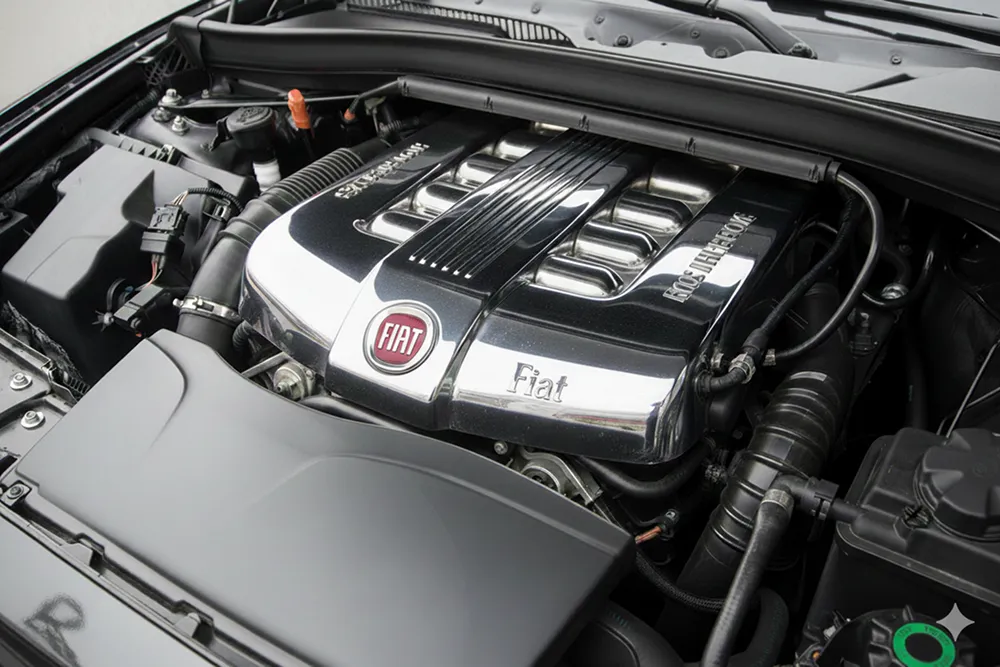
The Fiat 146 B.000 is a 1,581 cc inline — four petrol engine produced between 1988 and 1994. It served as the mid — range powerplant for the Fiat Tipo (Type 160) and subsequent 146 — series hatchback, delivering 62–68 kW (84–92 PS) depending on application. Equipped with a single overhead camshaft (SOHC), 8 — valve head, and twin — choke Weber 36 DOHC carburettor, it offered enhanced torque and drivability over the base 1.4L unit.
Fitted to the Fiat Tipo and 146 models, the B.000 w…
All B.000-equipped Fiat 146 models comply with ECE Regulation 15 Phase II .
The Fiat B.000 is a 1,581 cc inline-four SOHC petrol engine designed for compact hatchbacks (1988–1994). It combines twin-choke carburettor fuel delivery with durable iron-block construction to deliver improved mid-range performance and consistent reliability. Designed to meet ECE R15 Phase II standards, it balances drivability with serviceability for everyday motoring.
| Parameter | Value | Source |
|---|---|---|
Displacement | 1,581 cc | |
Fuel type | Petrol | |
Configuration | Inline-4, SOHC, 8-valve | |
Aspiration | Naturally aspirated | |
Bore × stroke | 80.0 mm × 79.0 mm | |
Power output | 62–68 kW (84–92 PS) | |
Torque | 128–132 Nm @ 2,800 rpm | |
Fuel system | Twin-choke carburettor (Weber 36 DOHC) | |
Emissions standard | ECE R15 Phase II | |
Compression ratio | 9.2:1 | |
Cooling system | Water-cooled | |
Turbocharger | Not applicable | |
Timing system | Chain-driven camshaft | |
Oil type | Refer to vehicle handbook / manufacturer specification | |
Dry weight | 136 kg |
The Fiat B.000 was used across Fiat's 146 series platforms with transverse mounting and no licensed external usage. This engine received platform-specific adaptations—twin-choke Weber 36 DOHC in SX trims—and from 1990, the facelifted 146 models adopted revised EGR calibration and improved intake sealing, creating minor service part distinctions. All adaptations are documented in OEM technical bulletins.
Engine Finders UK Ltd, which operates EngineCode.uk, can pass your enquiry to engine suppliers in the UK. The service is for vehicles in the United Kingdom, with UK delivery or fitting. This is a commercially connected service, and sending an enquiry does not confirm diagnosis or compatibility.
Diagnostic reminder: If a technician has recommended replacing the engine, you can send an enquiry to engine suppliers in the UK. Confirm the diagnosis first: an engine-code record does not diagnose a fault.
Field reports and technical service bulletins highlight component wear patterns under high-load operation. Adherence to manufacturer service intervals and approved fluid specifications is critical for long-term reliability.
Analysis derived from Fiat technical bulletins (1988-1994) and UK DVSA historic vehicle inspection data (2010-2023). Repair procedures should follow manufacturer guidelines.
The most common questions about engine codes, what they mean, how to find them and how this database works
Yes, when properly maintained. The B.000 features a robust iron block and proven SOHC design, making it durable over time. Early models (pre-1990) may show EGR or carburettor issues, but post-1990 revisions improved reliability. Regular oil changes with correct 10W-40 mineral oil and carburettor servicing are essential for long-term operation.
Common issues include carburettor mixture drift, EGR valve clogging, oil leaks from gaskets, and timing chain wear in early models. These are documented in Fiat service literature and observed in historic vehicle inspections. Upgrading to post-1990 components and using ethanol-resistant carburettor parts can mitigate many concerns.
The B.000 was used exclusively in the Fiat Tipo (160), Regata, and 146 range from 1988 to 1994. It powered the 1.6L, 1.6 EL, and 1.6 SX trims. No other Fiat platforms used this engine, and it was not licensed to other manufacturers.
Yes, within mechanical limits. The 1.6 SX variant already features a high-output tune with Weber 36 DOHC carburettor for 68 kW output. Enthusiasts often upgrade to performance camshafts, high-flow heads, and electronic ignition. However, tuning should preserve the engine's balance and avoid over-revving, as the crankshaft and rods are not designed for extreme RPM.
Moderate by modern standards. In a Fiat 146 1.6L, fuel consumption averages ~10.2 L/100km (city) and ~7.2 L/100km (highway), or approximately 28 mpg UK combined. The 1.6 SX model, with higher compression and twin carburettors, may consume 10–15% more fuel under spirited driving.
No. The B.000 uses a non-interference valve train design. If the timing chain fails or skips, the pistons will not contact the valves, preventing catastrophic internal damage. However, immediate repair is still advised to avoid secondary issues like misfires or poor compression.
Fiat specifies SAE 10W-40 mineral oil meeting API SE/CC standards. This viscosity protects the chain-driven camshaft and solid lifters effectively. Synthetic oils are not recommended unless seals are upgraded, as they may increase seepage in older gaskets. Oil should be changed every 15,000 km or annually.
Comprehensive technical documentation and regulatory references
EngineCode.uk is operated by Engine Finders UK Ltd. It provides engine-reference information and an optional commercial enquiry service. It is not an official manufacturer website. Check the record's sources and confirm vehicle-specific details before relying on it for parts, repairs or replacement.
Our editorial standard prioritises relevant manufacturer documentation and official regulatory sources. The sources and verification status for a record should be checked alongside the data.
A statement is not verified merely because a source is listed. Where supporting evidence is missing or conflicting, the record should identify that limitation. Please report unsupported or inconsistent information.
Transparency in gaps
A missing or unverified value does not mean the manufacturer has withheld it. We distinguish information not yet verified, information not available to us, and information explicitly not disclosed by the source.
Regulatory Stability
EU regulations are referenced using CELEX identifiers for long-term stability.
EUR-Lex
EU emissions and type-approval regulations (e.g., CELEX:32007R0715, CELEX:32017R1151).
GOV.UK: Vehicle Approval & V5C
UK vehicle approval processes, import rules, and MoT guidance.
DVLA: Engine Changes & MoT
Official guidance on engine swaps and inspection implications.
Vehicle Certification Agency (VCA)
UK type-approval authority for automotive products.
Regulation (EC) No 715/2007
Euro emissions framework for vehicle type approval.
Commission Regulation (EU) 2017/1151
WLTP and RDE testing procedures for emissions certification.
GOV.UK: Vehicle Approval
UK compliance and certification requirements for imported and modified vehicles.
VCA Certification Portal
Type-approval guidance and documentation.
Records are subject to review and correction. Source links, dates and verification notes should be read with the technical information. Our Editorial and Sourcing Policy explains our standards and review process.
Found an error or missing source? Report a problem with this page. Include the field or statement concerned and a supporting source if available. You can also email corrections@enginecode.uk.
Copyright and permissions
Images and other material may be protected by copyright. Attribution does not by itself grant permission to reuse material. If you believe material on this site infringes your rights, contact copyrights@enginecode.uk with the page URL and details of your claim. We will review the material and take appropriate action.
Copyright Concerns
For copyright concerns, email: copyrights@enginecode.uk
Our Privacy Policy explains how Engine Finders UK Ltd uses information from visits, vehicle lookups, enquiries and messages. Our Cookie Policy explains cookies and similar technologies and how to change your choices.
For access, correction, or deletion requests, email: gdpr@enginecode.uk
Trademark Notice
All trademarks, logos, and engine codes are the property of their respective owners. Use on this site is strictly for reference and identification.
Ownership and commercial services
EngineCode.uk is owned and operated by Engine Finders UK Ltd. Alongside our reference content, we offer an optional replacement-engine enquiry service through Engine Finders and may identify relevant services provided by businesses connected with us. These commercial connections are disclosed. Using an enquiry service is not required to read our reference content.
Engine Finders UK Ltd operates this website. Our optional enquiry service has a commercial purpose. Our Ownership and Commercial Disclosure explains the relationship between the reference website and that service. Participating suppliers pay a fee or subscription to participate on the network and receive quote requests.
Use this record as a starting point for identification. Specifications and vehicle applications may contain errors or omissions. Confirm the exact engine variant and compatibility using vehicle-specific documentation and a qualified supplier or technician.
All external links open in new tabs. Please verify current availability of resources.