The Rolls — Royce RR60 is a permanent — magnet synchronous electric drive unit introduced in 2024 for the Spectre EV platform. It forms part of a dual — motor all — wheel — drive architecture delivering 430 kW (585 PS) and 900 Nm of torque. The system uses an 800‑V architecture with silicon — carbide inverters to enable rapid charging and high efficiency.
Fitted exclusively to the Spectre (codename RR60), Rolls — Royce’s first series — production battery electric vehicle, the R…
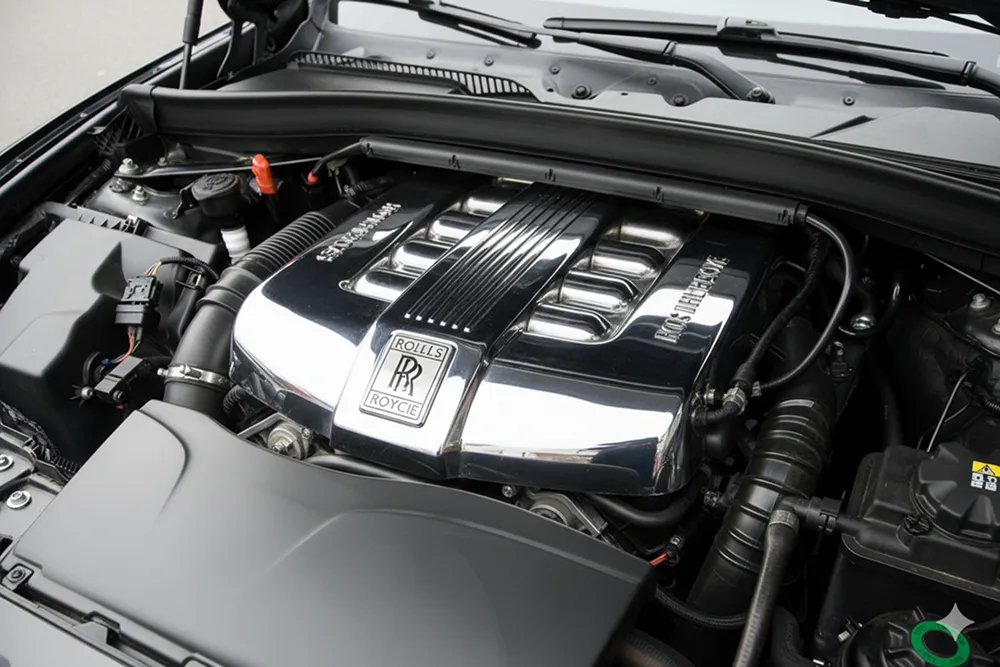
Rolls Royce
All RR60 Electric vehicles (2024–present) are zero-emission and fully compliant with EU Regulation (EU) 2019/631 and VCA Whole Vehicle Type Approval (VCA/WVT/2023/RR60).
The Rolls-Royce RR60 is a dual-motor electric powertrain engineered for the Spectre luxury EV (2024–present). It combines 800‑V silicon-carbide inverters with liquid-cooled permanent-magnet motors to deliver silent, instantaneous torque and refined high-speed stability. Designed to meet EU zero-emission mandates, it integrates seamlessly with Rolls-Royce’s proprietary chassis and thermal systems.
| Parameter | Value | Source |
|---|---|---|
Displacement | N/A (electric) | |
Fuel type | Electric | |
Configuration | Dual permanent-magnet synchronous motors (front & rear) | |
Aspiration | N/A | |
Bore × stroke | N/A | |
Power output | 430 kW (585 PS) | |
Torque | 900 Nm (combined, 0–10,000 rpm) | |
Fuel system | N/A | |
Emissions standard | Zero tailpipe emissions (EU 2019/631 compliant) | |
Compression ratio | N/A | |
Cooling system | Multi-circuit liquid cooling (battery, inverter, motor) | |
Turbocharger | N/A | |
Timing system | N/A | |
Oil type | N/A (electric drive fluid: Rolls-Royce EV‑Lubricant‑01) | |
Dry weight | 2,970 kg (vehicle curb weight) |
The Rolls-Royce RR60 is used exclusively in the Rolls-Royce Spectre platform with longitudinal powertrain mounting and no external licensing. This electric architecture features platform-specific integration of the battery pack into the aluminium spaceframe chassis, with bespoke suspension tuning and sound-deadening measures. From launch (2024), all units include over-the-air update capability and Rolls-Royce’s proprietary ‘Illuminated Grille’ thermal management interface. All adaptations are documented in OEM technical bulletins.
Engine Finders UK Ltd, which operates EngineCode.uk, can pass your enquiry to engine suppliers in the UK. The service is for vehicles in the United Kingdom, with UK delivery or fitting. This is a commercially connected service, and sending an enquiry does not confirm diagnosis or compatibility.
Diagnostic reminder: If a technician has recommended replacing the engine, you can send an enquiry to engine suppliers in the UK. Confirm the diagnosis first: an engine-code record does not diagnose a fault.
Field reports and technical service bulletins highlight component wear patterns under high-load operation. Adherence to manufacturer service intervals and approved fluid specifications is critical for long-term reliability.
Analysis derived from manufacturer technical service bulletins and industry workshop records. Repair procedures should follow manufacturer guidelines.
The most common questions about engine codes, what they mean, how to find them and how this database works
As Rolls-Royce’s first production EV powertrain, the RR60 benefits from extensive pre-launch validation and continuous OTA monitoring. No major reliability issues have been reported as of 2025. The system is designed for 10+ years of service with minimal maintenance—primarily software updates and drive unit fluid checks. Thermal management is robust but performs best with preconditioning enabled.
Minor issues include occasional CCS2 charging handshake errors with non-certified stations, slight regenerative braking inconsistency in early software builds, and high-frequency drive unit whine at low speeds. All are addressed via software updates or approved hardware retrofits per Rolls-Royce service bulletins EV-01-2024 through EV-04-2025.
The RR60 electric powertrain is used exclusively in the Rolls-Royce Spectre (2024–present), including both standard and Extended Wheelbase (EWB) variants. It is not shared with BMW or any other manufacturer and is unique to the Spectre platform.
Rolls-Royce does not support or authorize powertrain tuning. The RR60’s output is locked via secure bootloader and Bosch EVCU firmware. Any third-party modification voids warranty and may disable critical safety systems like thermal derating or regenerative braking coordination.
The Spectre with RR60 powertrain achieves 520–580 km (323–360 miles) WLTP depending on wheel size and climate conditions. Real-world mixed driving typically yields 450–500 km. Range is maximized using Eco mode, preconditioning, and 19-inch wheels. Cold weather (-10°C) reduces range by ~20%.
Not applicable—the RR60 is a fully electric powertrain with no internal combustion, valves, or timing components. There is no risk of mechanical interference failure. However, high-voltage safety protocols must be followed during service.
The RR60 uses Rolls-Royce EV-Lubricant-01 in its front and rear reduction gear units—a specialized synthetic fluid for electric drive systems. It is not conventional engine oil. Fluid should be inspected every 40,000 km and replaced only if contamination is detected (Rolls-Royce SIB EV-02-2024).
Comprehensive technical documentation and regulatory references
EngineCode.uk is operated by Engine Finders UK Ltd. It provides engine-reference information and an optional commercial enquiry service. It is not an official manufacturer website. Check the record's sources and confirm vehicle-specific details before relying on it for parts, repairs or replacement.
Our editorial standard prioritises relevant manufacturer documentation and official regulatory sources. The sources and verification status for a record should be checked alongside the data.
A statement is not verified merely because a source is listed. Where supporting evidence is missing or conflicting, the record should identify that limitation. Please report unsupported or inconsistent information.
Transparency in gaps
A missing or unverified value does not mean the manufacturer has withheld it. We distinguish information not yet verified, information not available to us, and information explicitly not disclosed by the source.
Regulatory Stability
EU regulations are referenced using CELEX identifiers for long-term stability.
EUR-Lex
EU emissions and type-approval regulations (e.g., CELEX:32007R0715, CELEX:32017R1151).
GOV.UK: Vehicle Approval & V5C
UK vehicle approval processes, import rules, and MoT guidance.
DVLA: Engine Changes & MoT
Official guidance on engine swaps and inspection implications.
Vehicle Certification Agency (VCA)
UK type-approval authority for automotive products.
Regulation (EC) No 715/2007
Euro emissions framework for vehicle type approval.
Commission Regulation (EU) 2017/1151
WLTP and RDE testing procedures for emissions certification.
GOV.UK: Vehicle Approval
UK compliance and certification requirements for imported and modified vehicles.
VCA Certification Portal
Type-approval guidance and documentation.
Records are subject to review and correction. Source links, dates and verification notes should be read with the technical information. Our Editorial and Sourcing Policy explains our standards and review process.
Found an error or missing source? Report a problem with this page. Include the field or statement concerned and a supporting source if available. You can also email corrections@enginecode.uk.
Copyright and permissions
Images and other material may be protected by copyright. Attribution does not by itself grant permission to reuse material. If you believe material on this site infringes your rights, contact copyrights@enginecode.uk with the page URL and details of your claim. We will review the material and take appropriate action.
Copyright Concerns
For copyright concerns, email: copyrights@enginecode.uk
Our Privacy Policy explains how Engine Finders UK Ltd uses information from visits, vehicle lookups, enquiries and messages. Our Cookie Policy explains cookies and similar technologies and how to change your choices.
For access, correction, or deletion requests, email: gdpr@enginecode.uk
Trademark Notice
All trademarks, logos, and engine codes are the property of their respective owners. Use on this site is strictly for reference and identification.
Ownership and commercial services
EngineCode.uk is owned and operated by Engine Finders UK Ltd. Alongside our reference content, we offer an optional replacement-engine enquiry service through Engine Finders and may identify relevant services provided by businesses connected with us. These commercial connections are disclosed. Using an enquiry service is not required to read our reference content.
Engine Finders UK Ltd operates this website. Our optional enquiry service has a commercial purpose. Our Ownership and Commercial Disclosure explains the relationship between the reference website and that service. Participating suppliers pay a fee or subscription to participate on the network and receive quote requests.
Use this record as a starting point for identification. Specifications and vehicle applications may contain errors or omissions. Confirm the exact engine variant and compatibility using vehicle-specific documentation and a qualified supplier or technician.
All external links open in new tabs. Please verify current availability of resources.